There's a particular kind of restlessness that brings you to this question. Maybe it's a career opportunity in a city where you know nobody. Maybe it's a breakup, a feeling that your current city no longer fits you, or just a quiet but persistent pull toward something different. Whatever brought you here — you're not being irrational. Moving to a new city alone is one of the most consequential personal decisions an adult can make, and most advice on the internet treats it like a bucket-list item with a packing checklist attached.
This isn't that kind of article.
We're going to look at this decision honestly — the real trade-offs, the emotional costs most people don't anticipate, the frameworks that actually help, and the specific questions you need to answer before you sign a lease or buy a one-way ticket.
---
Why This Decision Feels So Hard
Moving alone isn't just a logistical challenge. It's an identity question.
You're not just changing zip codes — you're deciding who you'll be without your existing social scaffolding. Your city holds your habits, your routines, your go-to coffee shop, and the friends who knew you before you had anything figured out. Leaving that isn't weakness or ingratitude. But it does mean you're voluntarily dismantling a support structure before you've built a replacement.
Most people underestimate this. They plan the move down to the furniture dimensions and forget to plan for the six weeks of profound loneliness that often follows arrival. That's not a reason to stay — it's a reason to go in with clear eyes.
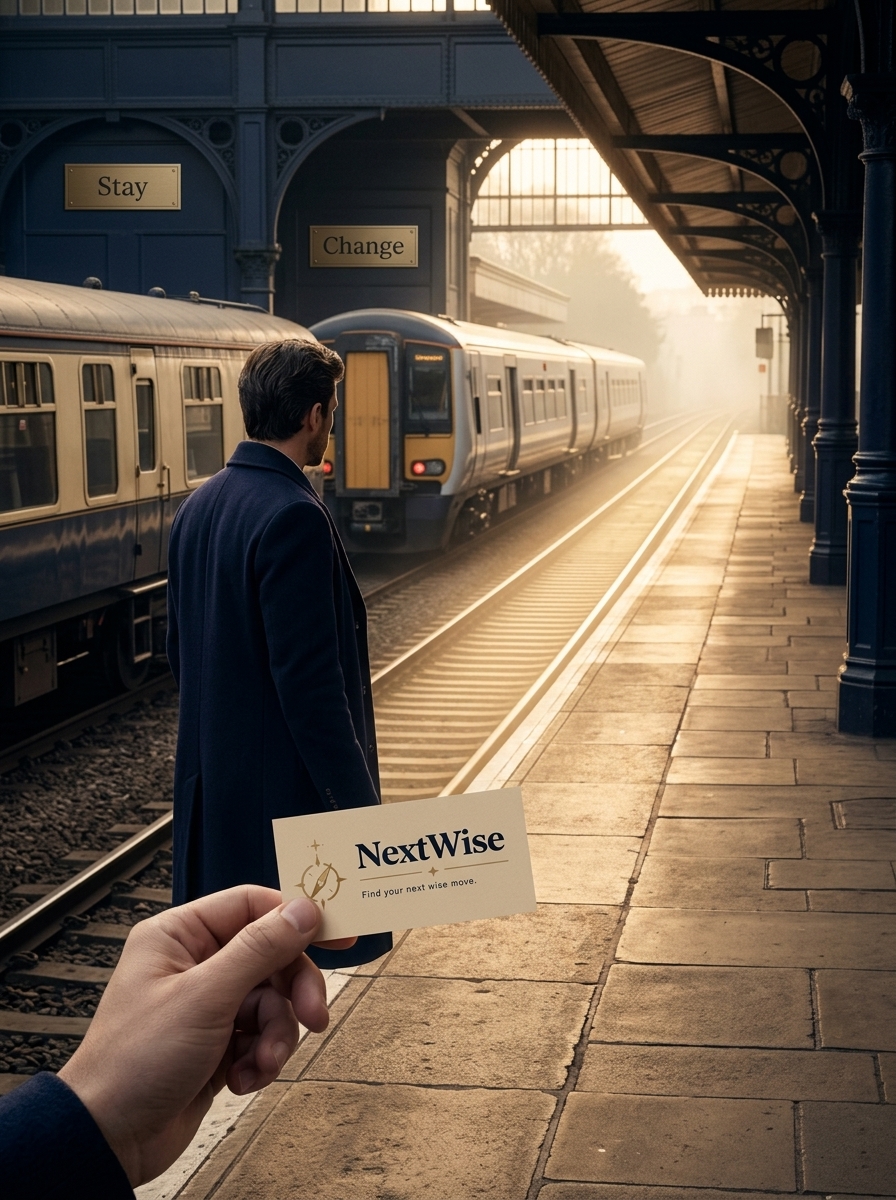
!Person standing at train platform with suitcase, moment of departure
---
The Real Trade-Offs Nobody Talks About
What You Gain
Autonomy at a level you may never have felt before. When no one knows you, you're free to become whoever you've been quietly trying to become. Old narratives dissolve. That's genuinely valuable.
Career acceleration. Certain cities are ecosystems for specific industries. If you're in tech, finance, film, or fashion, proximity to the right network is not trivial — it's often the single variable that separates equally talented people.
Self-knowledge. Moving alone stress-tests your self-reliance in a way that nothing else quite does. You'll discover capabilities you didn't know you had, and you'll also discover gaps you've been outsourcing to other people your entire adult life.
A break from inherited identity. In your hometown or long-term city, people relate to you through accumulated history. A new city offers a blank slate — not to reinvent yourself in some Hollywood montage sense, but to present yourself as you actually are now, not as you were at 22.
What You Risk
Extended social isolation. This isn't a two-week adjustment period for most people. Building a meaningful social life in a new city typically takes 12–18 months of consistent, sometimes uncomfortable effort. If you're introverted, have social anxiety, or work remotely, it can take longer.
Mental health strain. The correlation between social disconnection and depression is well-documented. Moving alone removes your existing buffers — the friend who'll notice you've gone quiet, the family member whose Sunday dinners keep you grounded. You'll need to proactively build new ones.
Financial exposure. In an unfamiliar city, your financial safety net depends entirely on your own income. No family nearby to help in a pinch, no friend with a spare room if something goes wrong. Your runway matters more than it did before.
Underestimating the emotional labor. Every new friendship requires energy. Every unfamiliar social context requires recalibration. When you're also managing a new job, new neighborhood, and new logistics, the cumulative weight is significant.
---
A Framework That Actually Works
Before making this decision, most people spend hours scrolling Reddit threads and asking friends who don't share their circumstances. What you actually need is a structured way to separate what you *know* from what you're *assuming*, and to surface the blindspots that only emerge under pressure.
Here's a simple three-layer filter you can apply right now:
Layer 1: Facts vs. Assumptions
Write down every reason you want to move. Then go through each one and mark it honestly: is this a fact or an assumption?
This exercise is uncomfortable because it reveals how much of the decision is built on hope rather than evidence. That's not automatically disqualifying — hope is valid data. But distinguishing it from fact changes how you plan.
Layer 2: Risks and Blindspots
Ask yourself: *What would have to be true for this to go badly?*
This isn't catastrophizing. It's stress-testing. If the move goes wrong, what's the most likely cause? Financial instability? Profound loneliness leading to a mental health crisis? A job that doesn't pan out? A city that looked great on Instagram but feels hollow to live in?
For each risk you identify, ask: *Is this a blindspot I've been avoiding, or a risk I've already accounted for?*
Most people find 2–3 risks they've been quietly aware of but haven't wanted to examine directly. Those are exactly the ones that derail moves.
Layer 3: A 7-Day Action Plan
If you decide to move, what are the seven most important things you'd do in your first week — not logistics, but social and emotional infrastructure? Who would you reach out to? What community or group would you join on day one? What would your plan be if you felt profoundly alone on day four?
Having this plan before you move is the difference between a hard transition and a crisis.
---
The Questions Worth Sitting With
Beyond the framework, there are questions that deserve honest reflection — not quick answers.
Are you moving toward something or away from something? Both are valid motivations, but they require different plans. Moving toward a clear goal (a career, a community, a version of yourself you're building) gives you a compass. Moving away from something painful without clarity on what you're moving toward often just relocates the problem.
How is your current relationship with solitude? Not loneliness — solitude. Moving alone means spending significant time with yourself, particularly in the early months. If you find extended alone time genuinely destabilizing rather than restorative, that's important information. Not a dealbreaker, but something to address directly.
What does your support system look like at a distance? Are you someone who maintains friendships through calls and texts, or do your relationships require physical proximity to stay alive? Be honest. Long-distance friendships require active maintenance, and not everyone is equally good at it.
What's your financial runway? If the job falls through, or takes longer to materialize than expected, how long can you sustain yourself? Three months isn't enough. Six is workable. Twelve gives you real breathing room.
Have you actually spent time in that city? Not visiting for a weekend. Time. Ideally a week or more, in the neighborhoods where you'd live, during a normal week — not a festival, not a summer visit when everything looks idyllic.
---
!Suitcase at door with decision cards laid out nearby

---
When Moving Alone Is Clearly the Right Call
For some people, in some circumstances, this decision isn't actually that difficult. The clarity is there, and what's needed is confirmation and a plan.
Moving alone tends to be the right call when:
When It's Worth Waiting
There are also circumstances where moving isn't the wrong answer — just not the right answer *yet*.
Wait, or at least slow down, when:
Reactive decisions can turn out fine. But they tend to produce regret at a higher rate than deliberate ones.
---
How NextWise Can Help You Decide
If you've read this far and you're still genuinely unsure — or if you're sure but haven't mapped out what happens next — this is exactly what NextWise is built for.
NextWise is an AI-powered decision mapping tool that walks you through the 3-Layer Filter: separating your facts from your assumptions, surfacing risks and blindspots you might be avoiding, and building a 7-Day Action Plan specific to your situation. It doesn't tell you what to decide. It helps you see your decision with unusual clarity.
It takes about 15 minutes. Most people report that it changes the texture of the decision — not necessarily flipping it, but removing the fog.
---
> Ready to map this decision? > > → Start your free Decision Map at NextWise > > Answer a few structured questions about your situation and get a personalized clarity report — including your 3-Layer Filter analysis and a 7-Day Action Plan if you decide to move forward.
---
One Last Thing
The fear that comes with this decision is real, and it's not irrational. It's information. It's telling you that you take this seriously, that you understand the stakes, and that you care about making a choice you can live with.
The goal isn't to eliminate that fear before you decide. The goal is to get clear enough that the fear stops being the loudest voice in the room.
Some people move to a new city alone and it becomes the defining chapter of their life — the one they look back on as the moment things finally started moving. Others move and spend two years quietly miserable before moving back, having learned something important but at a high cost.
The difference between those two outcomes is rarely luck. It's almost always preparation, self-knowledge, and honest decision-making before the first box gets packed.
That's what this is for.