You love your partner. The relationship works — most of the time. But somewhere between Sunday mornings on the couch and conversations that drift toward the future, a question surfaces that you can't quite shake: *should I get married, or is what we have already enough?*
This isn't a question about love. It's a question about alignment — about what you actually want, what your partner wants, and whether those two visions point in the same direction. It's also one of the most emotionally loaded decisions a person can face, precisely because the stakes feel so personal and so permanent.
This guide won't tell you what to do. What it will do is help you think about it more clearly — separating the noise from the signal, the fear from the fact, and the social pressure from your actual values.
---
Why This Decision Feels So Hard
The difficulty isn't usually the relationship itself. Most people who wrestle with this question are in genuinely good relationships. The difficulty is uncertainty — about the future, about yourself, and about whether a legal and ceremonial commitment changes something that already feels real.
There are also powerful forces pushing you in both directions simultaneously:
When all of these forces are active at once, it's nearly impossible to hear your own thinking. That's the first problem to solve.
---
What Marriage Actually Changes (And What It Doesn't)
One of the most useful things you can do is get specific about what marriage actually is — legally, socially, and relationally — versus what staying in a committed long-term relationship without marriage looks like.
What changes with marriage:
What doesn't automatically change with marriage:
If your long-term relationship has unresolved issues in any of those areas, marriage won't fix them. And if your relationship is strong in all of those areas, you may already have what marriage is supposed to create.
---
The Core Question Beneath the Question
!Decision fork in the road — navigating the marriage vs. long-term relationship choice
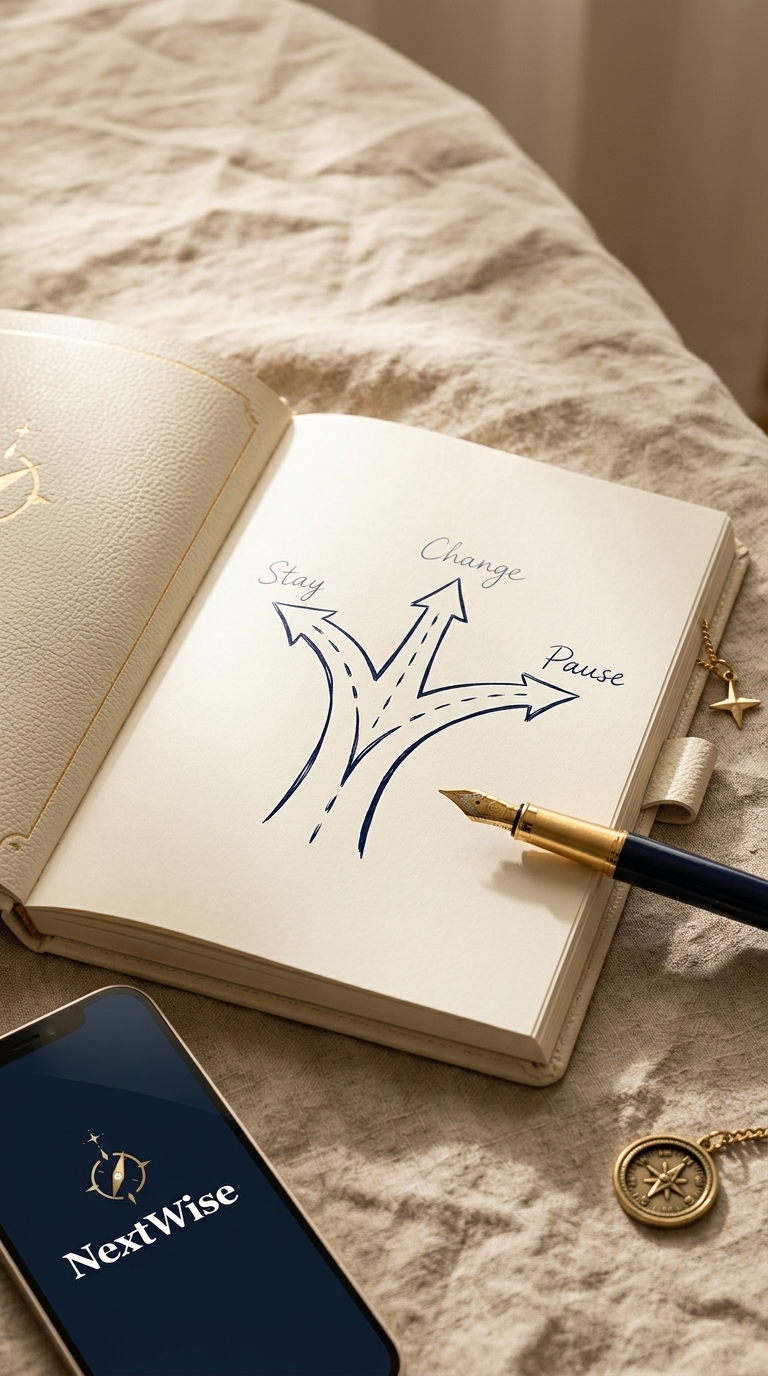
When people ask "should I get married or stay in a long-term relationship," they're usually actually asking one of several deeper questions:
1. Is my partner the right person? — This isn't really about marriage vs. no marriage. It's about whether this relationship is worth deepening at all. 2. Am I ready for the level of commitment marriage represents? — Fear of commitment is real, and it doesn't make you a bad person. It makes you human. 3. Will marriage make us stronger, or will it expose cracks? — Some couples thrive with structure; others find that a more fluid arrangement suits them better. 4. What do I actually want my life to look like in 10 years? — This is the question most people avoid, because the honest answer requires real self-knowledge.
Until you know which of these is your real question, you'll keep circling the surface-level debate without getting anywhere.
---
A Framework for Thinking It Through
Here is a structured way to approach this decision — not a quiz, not a flowchart, but a genuine analytical process.
Step 1: Separate Facts from Assumptions
Write down everything you believe about marriage and about staying unmarried. Then go back through the list and mark each item: is this a fact (something verifiable) or an assumption (something you believe but haven't tested)?
Common assumptions people hold:
Stripping assumptions down to what's actually true in your specific situation is the first step toward clarity.
Step 2: Map Your Risks and Blindspots
Every choice in a major life decision carries risks that are visible and risks that aren't. In this decision:
If you get married:
If you stay in a long-term relationship without marrying:
The blindspots most people miss:
Step 3: Build a 7-Day Action Plan
Clarity rarely comes from a single conversation or a long night of journaling. It comes from deliberate, structured inquiry over time. A practical 7-day plan might look like:
---
Signs the Answer Might Be "Get Married"
Signs the Answer Might Be "Not Yet" or "Not Marriage"
---
When Alignment Is the Real Issue
!A couple navigating a major life decision together — the dinner table moment
In many cases, the marriage question is really a relationship alignment question. Two people can love each other deeply and still want fundamentally different things. The question isn't always "should we get married" — it's sometimes "are we actually aligned on the life we're building?"
Alignment means more than agreeing on big-ticket items. It means your daily assumptions about how life works are compatible. It means your conflict styles don't create a permanent mismatch. It means you've both looked at the hard stuff — money, children, aging parents, career ambition, where to live — and you're not pretending the gaps don't exist.
If you haven't done this work yet, the marriage-or-not question is premature. The more urgent question is whether you're building something real together, with full information about who each of you actually is.
---
How NextWise Helps You Think Through This
This kind of decision is exactly what NextWise was built for. It's not a couples counselor and it's not a pros-and-cons list. It's an AI-powered decision mapping tool that walks you through the 3-Layer Filter:
1. Facts vs. Assumptions — NextWise helps you surface what you actually know versus what you're believing without evidence, so you stop making decisions based on faulty premises. 2. Risks & Blindspots — The system identifies the risks on both sides of your choice that you may not have considered, and maps out the consequences that are easy to overlook when you're emotionally close to the decision. 3. 7-Day Action Plan — Rather than leaving you with a vague sense of "think about it more," NextWise generates a concrete, personalized plan for reaching clarity — one structured step at a time.
Thousands of people have used this framework to move from circular thinking to genuine understanding of what they want and why.
---
> Ready to stop going in circles? > > ### Map Your Relationship Decision — Start Free > > NextWise walks you through the exact decision you're facing — whether to get married, stay in your long-term relationship, or figure out what you actually want before making any move. > > Start your Relationship Decision Map → > > *No pressure. No judgment. Just clarity.*
---
The Bottom Line
Should you get married or stay in a long-term relationship? There's no universal answer — and anyone who gives you one without knowing your specific situation is selling something.
What there is, however, is a process. A way of getting honest with yourself about what you want, what your partner wants, what's actually true about your relationship, and what risks you're taking on whichever path you choose.
The goal isn't to arrive at the "right" answer according to society, your family, or anyone else. The goal is to arrive at *your* answer — one you made with real information, clear thinking, and a genuine understanding of what you're choosing and why.
That kind of clarity is available to you. The question is whether you're ready to do the work to find it.